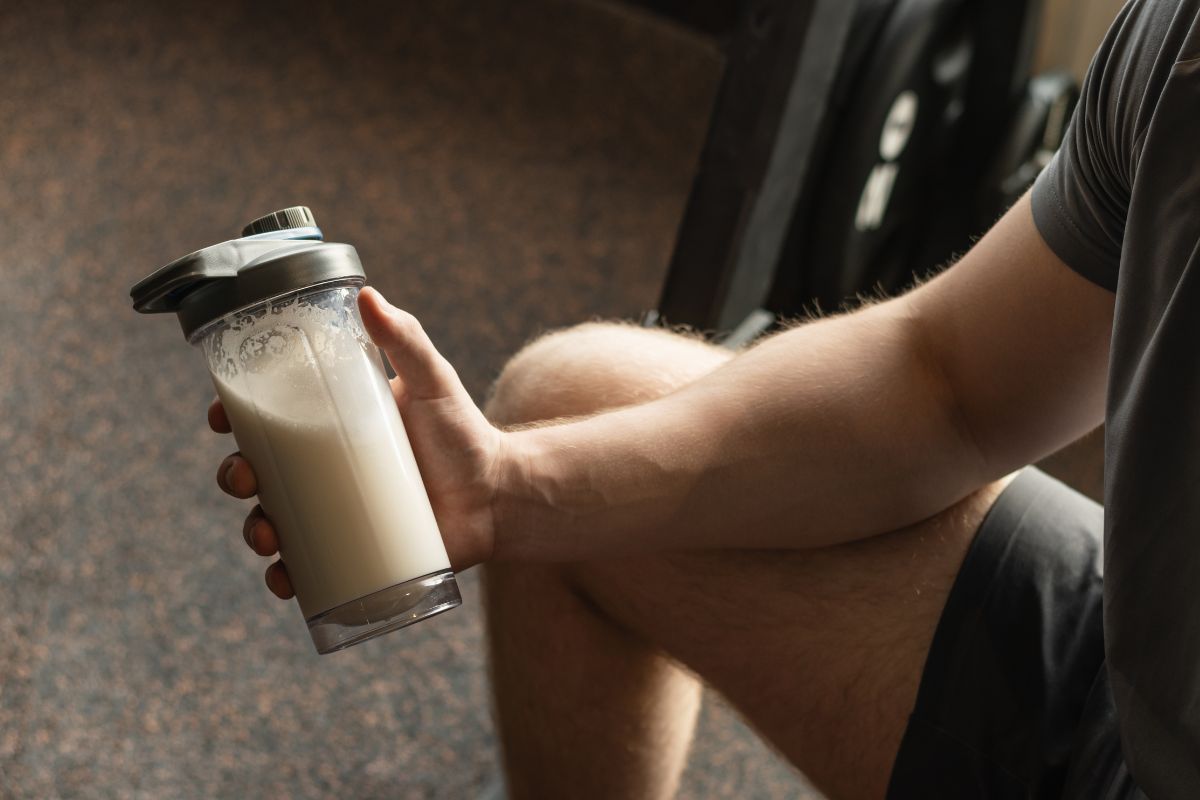
Article: Does Whey Protein Help Women Over 40 Lose Fat? A Coach's Answer
Does Whey Protein Help Women Over 40 Lose Fat? A Coach's Answer
You are eating less, training consistently, and the scale is barely moving. Or worse, it moves but your body composition is not changing the way it should. If you are a woman over 40, this is not a willpower problem. It is a protein problem.
The question most women in this position eventually land on is whether whey protein for women over 40 is actually worth it, and whether it can help them lose fat without losing the muscle their metabolism depends on. The answer is yes, but only when it is used correctly and consistently, which is where most advice falls short.
After 40, your body becomes significantly less efficient at building and preserving muscle. This shift is driven by estrogen decline, anabolic resistance, and the accelerating onset of sarcopenia. The strategies that worked in your 30s genuinely stop working. And the most common gap, across 17 years of coaching data, is not effort. It is protein intake, specifically whether it is high enough, consistent enough, and timed correctly for this stage of life.
The recommendations in this guide come from Diana Chaloux LaCerte, a certified personal trainer and trauma-informed coach who has guided more than 20,000 clients across 82 countries through body transformation, with a particular focus on women navigating fat loss and muscle preservation after 40.
Here is what actually works, why it works, and exactly how to apply it.
Is Whey Protein Good for Women Over 40?

Yes. Whey protein for women over 40 is one of the most targeted nutritional tools available for muscle preservation and body composition. The reason comes down to one amino acid: leucine. Whey protein contains the highest leucine content of any protein source, and leucine is the primary trigger for muscle protein synthesis in aging muscle tissue.
After 40, the body develops what researchers call anabolic resistance, a reduced ability to respond to the muscle-building signals that protein normally provides. Older adults over 40 show a blunted muscle protein synthesis response compared to younger adults, and research has confirmed that this anabolic resistance can be overcome by consuming greater quantities of leucine. Whey protein, whether from isolate or concentrate, delivers leucine in a form the body absorbs rapidly, creating the concentration spike in the bloodstream that aging muscle tissue needs to initiate repair.
This is not a minor distinction. A woman in her 20s can consume a moderate amount of protein and reliably trigger muscle protein synthesis. A woman over 40 eating the same amount will often produce a significantly smaller response from the same serving. The mechanism is the same in both cases. Leucine activates mTORC1, the primary signaling pathway that initiates muscle protein synthesis. But the sensitivity of that pathway decreases with age. Leucine is the essential amino acid that directly activates the mTORC1 signaling pathway in skeletal muscle, stimulating translation initiation and protein synthesis, and whey delivers more of it per gram than egg, soy, pea, or casein.
For more on how whey protein compares across goals and training stages, see what the research says about the best whey protein for muscle growth.
Why Protein Needs Change After 40?
The shift is not subtle. Sarcopenia, the age-related loss of skeletal muscle mass, begins accelerating in the early 40s and compounds with each passing year. Estrogen decline plays a direct role. Estrogen supports the anabolic signaling pathways that keep muscle tissue intact, and as levels fall during perimenopause, the body loses one of its key muscle-preservation mechanisms. The result is a faster rate of muscle protein breakdown relative to muscle protein synthesis, which tips the body toward lean mass loss even in women who are actively training.
Protein intake becomes the compensating variable. When dietary protein is consistently high enough, and specifically when leucine intake is sufficient to cross the threshold required for mTORC1 activation in aging muscle, the body can slow and in many cases reverse lean mass loss. For women over 40 who are also managing a caloric deficit, this balance becomes even more critical. Losing fat while preserving muscle requires a higher daily protein target than most women in this age group are currently hitting.
What Makes Whey Protein Different From Other Sources?
Not all protein sources carry equal anabolic potential for women in this stage of life. Whey protein contains 8.6 grams of leucine per 100 grams, compared to 5.8 grams in casein, 5.0 grams in soy, and 5.7 grams in pea protein isolate. That gap matters specifically because of anabolic resistance. A protein source that delivers less leucine per serving requires a larger total serving to reach the same muscle protein synthesis response. For women managing appetite, caloric targets, and daily routine, that difference is practically significant.
Whey protein also digests rapidly, delivering essential amino acids to muscle tissue within 30 to 60 minutes of consumption. This speed of delivery is what makes it particularly effective around training, when muscle tissue is most receptive to amino acid uptake and the window for repair is at its widest.
Does Whey Protein Help Women Over 40 Lose Weight?

Yes, but the more precise question is whether it helps lose fat without losing muscle. For women over 40, that distinction matters more than the number on the scale. Whey protein supports fat loss by preserving the lean muscle mass that drives metabolic rate, increasing satiety through hormonal signaling, and delivering leucine to trigger muscle protein synthesis even during a caloric deficit.
The challenge specific to women over 40 is that caloric restriction and fat loss do not happen in isolation. When the body is in a caloric deficit, muscle protein synthesis decreases and muscle proteolysis increases, meaning the body begins breaking down muscle tissue for energy alongside fat. A randomized controlled trial on postmenopausal women found that whey protein supplementation during weight loss reduced thigh muscle volume loss nearly in half, with the protein group losing 2.8% of thigh muscle volume compared to 4.7% in the group consuming only the standard recommended protein intake. That gap in muscle retention has direct consequences for metabolism, strength, and long-term body composition.
This is the core argument for using whey protein for women over 40 who are actively trying to lose fat. The goal is not simply to lose weight. The goal is to direct that weight loss toward fat stores while preserving the lean mass that determines how efficiently the body burns calories at rest.
How Whey Protein Supports Fat Loss Without Muscle Loss?

Three mechanisms work simultaneously when whey protein intake is sufficient during a fat loss phase.
The first is muscle protein synthesis preservation. Even in a caloric deficit, adequate leucine intake from whey protein can stimulate enough mTORC1 activity to maintain muscle tissue. Without it, the body defaults to breaking down muscle alongside fat to meet its energy demands.
The second is the thermic effect of protein. The body expends more energy digesting and processing protein than it does carbohydrates or fat. Higher protein intake increases diet-induced thermogenesis, which means a portion of the caloric deficit is created through the digestion process itself rather than purely through restriction.
The third is appetite regulation. Whey protein stimulates the release of satiety hormones including GLP-1 and peptide YY, which signal fullness and reduce appetite between meals. For women over 40 navigating reduced appetite, hormonal fluctuations, and energy shifts during perimenopause, this stabilizing effect on hunger makes consistent caloric control more sustainable.
Why Resistance Training and Whey Work Together?
Whey protein and resistance training are not interchangeable tools. They are complementary mechanisms. Resistance training creates the stimulus for muscle repair and growth by generating micro-tears in muscle fibers during exercise. Whey protein supplies the amino acids that repair those fibers and rebuild them stronger. Neither works as effectively in isolation for women over 40.
According to a systematic review and meta-analysis published in the journal Nutrients, whey protein in combination with resistance training significantly enhanced biceps curl strength and lower limb lean mass in postmenopausal women, while whey protein without resistance training produced no significant benefit on muscle strength or lean mass. The combination is what produces measurable body composition change. Whey protein alone, without the training stimulus, does not deliver the same result for this audience.
This is a distinction that most online content misses entirely, and one that Diana addresses directly with every new client who asks whether they can skip the training and just take the protein.
Does Whey Protein Affect Hormones in Women?

No. Whey protein does not disrupt hormones in women. It does not raise estrogen, interfere with progesterone, or cause hormonal imbalance. This question comes up constantly in coaching practice with women over 40, and the hesitation it creates is one of the most common reasons this audience avoids whey protein entirely, often at the exact stage of life when consistent protein intake matters most.
The confusion is understandable. The internet blends legitimate concerns about soy protein, which contains phytoestrogens that can mimic estrogen in the body, with generic warnings about all protein powders. Whey protein is not soy protein. It does not contain phytoestrogens. No solid evidence shows that protein powders significantly increase estrogen levels in women to a harmful extent, and a study in the American Journal of Clinical Nutrition found that dietary protein had little impact on estrogen levels. The fear is not evidence-based when applied specifically to whey.
What matters more for women over 40 is the indirect relationship between protein intake and hormonal health. As estrogen declines during perimenopause, the body loses one of its key mechanisms for maintaining lean muscle mass and stable body composition. Fat gain, particularly around the midsection, accelerates. That shift in body composition creates its own hormonal disruption, affecting insulin sensitivity, cortisol regulation, and metabolic function. Whey protein, by supporting lean muscle preservation and body composition stability, indirectly supports the hormonal environment rather than undermining it.
What the Research Actually Shows?
The protein source that carries the most documented concern for hormonal disruption in women is soy, not whey. Soy protein contains isoflavones, plant-based compounds that bind to estrogen receptors in the body and can influence hormonal signaling, particularly in women with estrogen-sensitive conditions. This is a legitimate consideration. Whey protein carries no equivalent mechanism.
Whey protein does not raise testosterone levels in women, and there is no scientific evidence linking whey protein intake to irregular periods or menstrual dysfunction. Muscle gain from whey is driven by its amino acid content, not hormone alteration. For women navigating perimenopause, who are already managing genuine hormonal shifts, adding a clean-label whey protein to a daily routine introduces no additional hormonal variable.
The more relevant hormonal interaction is with insulin. Whey protein consumed alongside carbohydrates slows glucose absorption, which supports insulin sensitivity and reduces blood sugar spikes. For women over 40, who face increased insulin resistance as part of the hormonal changes associated with estrogen decline, this effect works in their favor.
Why This Question Matters More After 40?
Women over 40 are acutely aware that their bodies are changing. They are more cautious about what they put into them, and rightfully so. But that caution, when applied without accurate information, often leads to avoiding the very tools that would help most.
Diana hears this question regularly in coaching sessions, and the answer is always the same: whey protein is not a hormonal disruptor. It is a protein source. The amino acids it delivers are the same building blocks the body uses to repair muscle tissue, produce enzymes, and support the very metabolic functions that hormonal decline makes harder to maintain. Avoiding it out of unfounded concern does not protect hormonal health. It accelerates the muscle loss and body composition changes that perimenopause is already driving.
The hesitation is common. The evidence to justify it is not there.
What Diana Chaloux LaCerte Recommends After 17 Years of Coaching?

Diana Chaloux LaCerte is a certified personal trainer and trauma-informed coach who has guided more than 20,000 clients across 82 countries through body transformation, with a particular focus on women navigating fat loss and muscle preservation after 40. The pattern she sees most consistently across this audience is not a training problem. It is a protein problem, and specifically a consistency problem.
"After 40, you don't rise to your workouts. You recover to your habits." That phrase comes directly from Diana's coaching sessions, and it captures the shift in mindset that women in this age group need to make. The question is not whether to train harder. The question is whether the daily protein foundation is in place to support the training that is already happening.
The Most Common Mistake Women Over 40 Make With Protein
The mistake Diana sees most often is not a dramatic one. It is quiet and cumulative. A woman is eating what she considers a clean, balanced diet. She is training three times a week. She is doing everything the general advice says to do. But her total daily protein intake is sitting somewhere between 40 and 60 grams, spread thinly across three meals, with long gaps between each one. She may add a scoop of whey protein after a workout once or twice a week and expect that to move the needle.
It does not. Not at this stage of life.
"Protein isn't about getting bigger. It's about not shrinking." That is the reframe Diana uses in coaching sessions with women who are hesitant about increasing their intake. After 40, the body is in an ongoing negotiation between muscle preservation and muscle loss. Consistent, adequate protein intake is what keeps that negotiation tilting in the right direction. Occasional protein intake does not.
Across Diana's female coaching clients over 40, roughly 8 in 10 who added daily whey protein, not just post-workout but as a structured part of their morning and post-workout routine, reported reduced soreness within 2 to 3 weeks and measurable strength gains within four weeks. The pattern holds regardless of training level, whether the client is a beginner or has been lifting for years. The variable that changes the outcome is not the training. It is the consistency of the protein.
What Changed for One Client and What It Means for You?
One client Diana worked with, a 47-year-old woman training three times per week, came in eating cleanly but hitting only around 55 grams of protein per day. She was not seeing changes in her body composition despite consistent training and a disciplined approach to her diet. The single adjustment was structured whey protein use: one scoop within 30 to 60 minutes post-workout and one scoop earlier in the day, usually at breakfast or mid-morning. Total daily protein increased from 55 grams to approximately 95 grams.
Within four weeks, she reported noticeably reduced soreness between sessions, added weight to her lifts, and lost 3.5 pounds of fat while maintaining her total scale weight. The only real change was consistent protein intake, with whey protein as the practical tool that made hitting that daily target achievable without overhauling her entire diet.
"I tell clients your muscle is like savings in a bank. After 40, withdrawals happen faster. Protein is how you keep depositing." That analogy lands because it is accurate. Every day without adequate protein is a net withdrawal from a reserve that becomes harder to rebuild as the years go on.
Diana's protocol for female clients over 40 is straightforward. Target 80 to 110 grams of total protein per day, adjusted for body size and activity level. Use a 20 to 25 gram serving of whey protein within 30 to 60 minutes post-workout. Add a second serving earlier in the day, at breakfast or mid-morning, even on rest days. Daily consistency matters more than perfect timing. The first two weeks typically bring better energy and fewer hunger swings. By weeks three and four, reduced soreness and improved strength output follow. Visible body composition changes come at the four week mark and beyond, but only when the daily protein habit is in place from day one.
"If you don't feed your muscle, your body will replace it with something else." That is what Diana tells clients who are on the fence. It is not a scare tactic. It is the biology of what happens after 40 when protein intake stays too low for too long.
What Is the Best Whey Protein for Women Over 40?
For women over 40 who are using whey protein specifically to support fat loss, muscle preservation, and daily recovery, the formulation of the protein they choose matters beyond the gram count on the label. A single-source whey delivers one absorption speed. A blend delivers two, and for women navigating the biological demands of this stage of life, that difference is meaningful.
The Hitch Fit Whey Protein Fusion Blend was built around this principle. Rather than choosing between whey isolate for speed or concentrate for a slightly more sustained delivery curve, the Fusion Blend combines both sources in a single 25 gram serving. The isolate component absorbs rapidly, delivering essential amino acids to muscle tissue in the post-workout window when repair begins. The concentrate component extends that amino acid availability, supporting the ongoing muscle protein synthesis that continues between meals throughout the day.
For women over 40, that sustained delivery matters. Recovery does not end when the workout does. Muscle repair continues for hours after training, and a protein source that supports only the immediate post-workout window leaves the extended repair process without adequate nutritional support. The blend addresses both phases in a single serving, which is why Diana reaches for it as her default recommendation for female clients in this age group rather than a single-source isolate.
Why a Fusion Blend Works Better Than Single-Source Whey?
The practical case for a blend over a single-source whey comes down to how the body actually processes and uses protein after 40. Whey isolate is fast. It spikes amino acid availability quickly, which is ideal immediately after training when the muscle protein synthesis window is open. But that spike also clears relatively quickly, leaving a gap in amino acid availability before the next meal.
Whey concentrate digests more slowly, producing a steadier release of amino acids that extends the delivery window. On its own, it is less effective at producing the acute leucine spike that aging muscle tissue needs to initiate mTORC1 signaling. Combined with isolate, it fills the window that isolate alone leaves open.
The result is a protein source that works with the way women over 40 actually eat and train, delivering the rapid post-workout response their muscle tissue needs while sustaining amino acid availability through the hours that follow. The Fusion Blend provides a complete spectrum of essential amino acids and is naturally rich in BCAAs, including leucine, the specific amino acid that activates muscle protein synthesis in aging muscle tissue where anabolic resistance has reduced the body's sensitivity to standard protein doses.
Diana describes it simply in coaching sessions: the Fusion Blend is not a supplement for women trying to build a bodybuilder physique. It is a daily protein tool for women who want to keep the muscle they have, recover between sessions, and support the body composition changes that consistent training and adequate protein make possible after 40.
Who the Hitch Fit Whey Protein Fusion Blend Is Built For?
This product is specifically suited for women over 40 who are strength training consistently and struggling to hit daily protein targets through food alone. It fits the profile of the client Diana describes most often: disciplined, active, eating reasonably well, but under-consuming protein because appetite has decreased, meal timing is inconsistent, or the practical challenge of hitting 80 to 110 grams of protein per day from whole food sources alone is too demanding to sustain.
A single serving post-workout and a second serving at breakfast or mid-morning covers approximately 50 grams of that daily target from two simple additions to an existing routine. No dietary overhaul required.
The Fusion Blend contains no artificial sweeteners or colors and is produced under cGMP certified manufacturing standards, which matters for women in this age group who are paying closer attention to ingredient quality and digestive tolerance as their sensitivity to heavily processed foods increases. It is formulated by coaches who use it themselves, not developed in response to market trends.
Explore the full range at Hitch Fit's premium protein collection if you are comparing options before committing to a specific product.
How Much Whey Protein Should a Woman Over 40 Take Per Day?

For women over 40 who are strength training consistently, the daily protein target that supports muscle preservation and fat loss sits between 80 and 110 grams of total protein per day, adjusted for body size and activity level. Within that total, a 20 to 25 gram serving of whey protein taken within 30 to 60 minutes post-workout and a second 20 to 25 gram serving earlier in the day covers approximately 40 to 50 grams from two structured additions to an existing routine.
According to the International Society of Sports Nutrition, general recommendations for protein intake per serving to maximize muscle protein synthesis are 20 to 40 grams of a high-quality protein source, with doses ideally distributed every 3 to 4 hours across the day. For women over 40, where anabolic resistance reduces the muscle protein synthesis response per gram of protein consumed, hitting the upper end of that per-serving range and distributing intake consistently throughout the day matters more than it does for younger women.
What Diana emphasizes with every client is that the daily total takes priority over perfect timing. A woman who consistently hits 90 grams of protein per day with imperfect timing will outperform a woman who occasionally takes protein at the optimal post-workout window but misses the daily target more days than not. Consistency beats precision.
Diana's Exact Protocol for Female Clients Over 40
The protocol Diana uses with female clients over 40 is straightforward and designed around real-life constraints, not ideal laboratory conditions.
-
Daily protein target: 80 to 110 grams of total protein per day, from all sources combined. Women on the lower end of that range are typically smaller or less active. Women training 3 or more days per week, or in an active fat loss phase, should target the higher end.
-
Serving size: 20 to 25 grams of whey protein per serving. One scoop of the Hitch Fit Whey Protein Fusion Blend delivers 25 grams, which sits at the top of the range where leucine delivery is sufficient to clear the mTORC1 activation threshold in aging muscle tissue.
-
First serving: Within 30 to 60 minutes post-workout. This is the window when muscle tissue is most receptive to amino acid uptake and repair begins. Appetite suppression after training is common in women over 40, which is exactly why Diana recommends a smaller, structured serving at this point rather than waiting for hunger to return. Waiting for hunger often means the window closes before any protein is consumed.
-
Second serving: Earlier in the day, at breakfast or mid-morning, including on rest days. Protein intake on rest days supports the ongoing muscle repair that continues for 24 to 48 hours after training. Skipping protein on rest days because no workout occurred is one of the most common timing mistakes Diana sees.
-
Frequency: Daily. Not on training days only. The muscle preservation that whey protein supports is a continuous process, not one that switches on and off with the training schedule.
Common Timing Mistakes and How to Fix Them
Two timing patterns consistently undermine results for women over 40 who are already using whey protein correctly in terms of dose.
The first is waiting too long post-workout. Appetite suppression after training is a real physiological response, and it is more pronounced in women over 40 than in younger women. The mistake is interpreting that suppression as a reason to delay protein intake. The repair window does not wait for appetite to return. A 20 gram serving taken within 30 minutes of finishing a session, even if it does not feel appealing in the moment, delivers the amino acids muscle tissue is waiting for.
The second is concentrating all protein intake in the evening. Many women in this age group eat lightly during the day and consume the majority of their protein at dinner. Ingesting a 20 to 40 gram protein dose of a high-quality source every 3 to 4 hours appears to most favorably affect muscle protein synthesis rates compared to other dietary patterns and is associated with improved body composition and performance outcomes according to the International Society of Sports Nutrition. A large protein serving at dinner does not compensate for the absence of protein earlier in the day. The muscle protein synthesis response is not cumulative across a day. Each serving window either triggers it or does not.
Spreading intake across two to three protein-containing moments during the day, with whey protein filling the gaps that whole food sources do not reliably cover, is the practical fix that Diana applies with the majority of her female clients over 40 who are not seeing the results their training warrants.
Should Women Over 40 Take Protein Powder?

Yes, and specifically for women over 40 who are training consistently but not seeing the body composition changes their effort warrants, whey protein is often the missing variable. The question is not whether protein powder is necessary in an abstract sense. The question is whether hitting 80 to 110 grams of total protein per day from whole food sources alone is realistic given real-life appetite, schedule, and the natural decrease in hunger that often accompanies this stage of life. For most women in this group, it is not. Whey protein fills that gap efficiently, without adding significant calories or overhauling an existing routine.
The hesitation is real and Diana hears it in every coaching intake. The objections are consistent, the concerns are understandable, and the answers are straightforward.
Answering the Most Common Objections
"I don't want to get bulky."
This is the most common objection Diana encounters with female clients over 40, and it reflects a fundamental misunderstanding of what whey protein does in the context of this audience. Women over 40 are not at risk of accidentally building too much muscle. The hormonal environment after estrogen decline actively works against muscle accumulation. The real risk runs in the opposite direction entirely. Muscle loss, not muscle excess, is what women in this age group are fighting against every day.
Diana's reframe is direct: "You're not trying to build a bodybuilder physique. You're trying to keep the muscle you already have. That requires support." The goal of whey protein for women over 40 is preservation and recovery, not transformation into something the body is not hormonally equipped to become.
"I eat enough protein already."
This objection almost always comes from women who are eating what they consider a clean, balanced diet. When Diana digs into the actual numbers, the total daily intake is typically between 40 and 65 grams. That range supports basic function. It does not support muscle preservation under the hormonal conditions of perimenopause, active training, or a caloric deficit. The gap between what feels like adequate protein and what is actually adequate protein for this audience is wider than most women realize until they track it.
"Protein powder upset my stomach before."
This is a legitimate concern and one that deserves a specific answer rather than a dismissal. Digestive sensitivity increases after 40, and many women who tolerated a protein powder in their 30s find it causes bloating or discomfort later. The culprit is usually lactose content, artificial sweeteners, or heavily processed ingredients rather than whey protein itself. A clean-label whey product without artificial sweeteners or colors, produced under certified manufacturing standards, removes the most common sources of digestive friction. Quality of formulation matters as much as protein source.
The One Test Diana Gives Every Skeptic
Diana does not argue with skeptics. She gives them a test.
"Let's try it for two weeks. Not forever. Just commit to consistency and see what your body tells you."
Two weeks is enough time for the first observable signals to appear. Better energy levels, fewer hunger swings between meals, reduced soreness after training sessions. These are not dramatic transformations. They are the body responding to adequate protein intake in a way that is noticeable enough to make the case on its own, without requiring the client to believe anything in advance.
Once a woman who was skeptical feels the difference that consistent daily protein makes, the question stops being whether to take it. The question becomes how to build it reliably into the daily routine. That is where the protocol Diana outlined in the previous section takes over.
The skepticism is understandable. The two week test makes it unnecessary.
Frequently Asked Questions About Whey Protein for Women Over 40
Can Whey Protein Cause Weight Gain in Women Over 40?
Whey protein does not cause weight gain on its own. Weight gain occurs when total caloric intake consistently exceeds caloric expenditure, regardless of the protein source. A standard 25 gram serving of whey protein delivers approximately 120 to 130 calories. Used as a meal component rather than an addition on top of an already sufficient diet, whey protein supports fat loss and muscle preservation simultaneously. The concern about weight gain from protein powder is not supported by the research.
What Happens if Women Over 40 Don't Get Enough Protein?
Without adequate daily protein, women over 40 accelerate the muscle loss that estrogen decline and sarcopenia are already driving. The body begins breaking down existing muscle tissue to meet its amino acid needs, which reduces metabolic rate, weakens strength output, and makes body composition progressively harder to improve over time. Low protein intake during a caloric deficit compounds this effect significantly, directing weight loss toward lean mass rather than fat stores.
Is Whey Isolate or Concentrate Better for Women Over 40?
Neither isolate nor concentrate alone is the optimal choice for women over 40. Isolate absorbs rapidly and delivers the acute leucine spike that aging muscle tissue needs to initiate muscle protein synthesis. Concentrate digests more slowly, extending amino acid availability between meals. A blend of both addresses the full recovery window, supporting immediate post-workout repair and the ongoing muscle protein synthesis that continues for hours after training ends. For this audience, a fusion blend outperforms either single source.
How Long Does It Take To See Results From Whey Protein for Women Over 40?
Based on Diana's coaching practice across thousands of female clients over 40, the first observable changes typically appear within one to two weeks of consistent daily use. These include improved energy levels and reduced hunger swings between meals. Reduced post-workout soreness and improved strength output generally follow by weeks three and four. Visible body composition changes, including fat loss with maintained muscle tone, become measurable at the four week mark and beyond, provided daily protein targets are consistently met.
Can Women Over 40 Take Whey Protein if They Are Lactose Intolerant?
Many women with lactose intolerance tolerate whey protein isolate well. The isolation process removes most of the lactose present in whole whey, making isolate a lower-lactose option compared to concentrate. A blend containing both isolate and concentrate will carry a small amount of residual lactose from the concentrate component. Women with moderate lactose sensitivity typically have no issue with a high-quality fusion blend. Women with severe lactose intolerance should start with a small serving and assess their individual response before committing to daily use.
Does Whey Protein Help With Energy Levels in Women Over 40?
Yes, indirectly but consistently. Adequate protein intake stabilizes blood sugar by slowing glucose absorption, which reduces the energy spikes and crashes that many women over 40 experience between meals. It also supports the lean muscle mass that drives resting metabolic rate, meaning the body burns energy more efficiently throughout the day. Diana's clients consistently report improved and more stable energy levels within the first two weeks of structured daily protein use, typically before visible body composition changes appear.
The Bottom Line
Whey protein for women over 40 is not a bodybuilding supplement. It is a muscle preservation tool for women whose bodies have become less efficient at building and maintaining lean mass, whose daily protein intake rarely matches what the biology of this stage of life actually requires, and whose training results are being quietly undermined by a gap that a consistent daily protein habit can close.
The research is clear. The coaching data across Diana's 20,000 plus clients confirms it. The single variable that separates women in this age group who see body composition changes from women who do not is rarely the training. It is whether daily protein intake is high enough, consistent enough, and distributed correctly to support what the training is asking the body to do.
Two servings of whey protein per day, one post-workout and one earlier in the morning, covering 40 to 50 grams of a daily target of 80 to 110 grams total, is the protocol Diana uses with female clients over 40 who are training consistently and not seeing the results they have earned.
The Hitch Fit Whey Protein Fusion Blend was formulated specifically for this application. A blend of whey isolate and concentrate delivering 25 grams of protein per serving, with a complete essential amino acid profile naturally rich in leucine, no artificial sweeteners or colors, and cGMP certified manufacturing. It is the product Diana uses herself and recommends to the women she coaches because it was built by coaches who understand what this audience actually needs, not by marketers responding to what sells.
Start with two weeks of daily consistency. The results will make the case on their own.

Written by Micah LaCerte